
Manitoba Dental Fee Guide 2023: A Comprehensive Overview
Navigating Manitoba’s dental costs requires understanding the 2023 fee guide, coordinating benefits with programs like CDCP, and knowing how claims are processed for optimal coverage.
The 2023 Manitoba Dental Fee Guide serves as the foundational document for establishing reasonable and customary fees for dental procedures throughout the province. It’s crucial for both dental professionals and patients to understand its structure and application. This guide isn’t legally binding, but it’s widely accepted as the standard for determining fair pricing, especially when navigating insurance claims and provincial programs like the CDCP (Child Dental Care Program).
Understanding the guide involves recognizing that fees are categorized by procedure code, allowing for consistent billing and claim processing. The guide details fees for a comprehensive range of services, from preventative care like scaling and polishing to more complex treatments such as restorative work, endodontics, and oral surgery.
Effective coordination of benefits, particularly between the CDCP and Manitoba’s provincial dental programs, relies heavily on adherence to the fee guide. Providers submit claims based on these fees, and reimbursement levels are often determined by the guide’s rates. Staying informed about the latest updates and revisions to the guide is essential for accurate billing and maximizing coverage for patients. The guide is a dynamic resource, reflecting changes in the cost of providing dental care.
Understanding Dental Fee Guides in Manitoba
Dental fee guides in Manitoba aren’t laws, but represent a consensus reached between the Manitoba Dental Association and Manitoba Health. They establish a framework for reasonable charges for dental services, promoting transparency and fairness in billing practices. These guides are updated periodically to reflect changes in the cost of materials, equipment, and the overall economic climate impacting dental practices.
The primary purpose of the fee guide is to facilitate smooth claim processing with insurance companies and provincial programs. While dentists aren’t legally obligated to follow the guide precisely, exceeding the listed fees may trigger scrutiny from insurers or require justification to patients. Understanding the guide’s structure – categorized by procedure codes – is vital for both providers and patients.
Crucially, the guide doesn’t dictate the quality of care, only the cost. Dentists retain professional judgment in determining the most appropriate treatment plan for each patient. Coordination of benefits, especially with programs like the CDCP, hinges on understanding how Manitoba’s fees compare to those established by other payers, allowing for potential additional reimbursement when applicable.
Coverage Under Manitoba’s Provincial Dental Program
Manitoba’s program offers dental benefits to eligible residents, with coverage varying based on individual circumstances; claims require submission to Manitoba Dental Services for processing.
Eligibility Criteria for Manitoba’s Dental Program
Determining eligibility for Manitoba’s provincial dental program involves several key criteria, ensuring assistance reaches those most in need. Primarily, the program targets individuals and families with demonstrated financial need, often linked to low-income levels. Specific income thresholds are established annually and vary depending on family size, reflecting the cost of living adjustments;
Beyond income, eligibility extends to specific populations, including individuals receiving income assistance, those on Employment and Income Assistance (EIA), and certain children in care. Furthermore, some individuals with specific medical conditions that impact their dental health may also qualify, requiring supporting documentation from a healthcare professional.
It’s crucial to note that eligibility isn’t automatic; applicants must complete an application process, providing necessary financial and personal information for verification. Manitoba Dental Services thoroughly reviews each application to confirm compliance with the established criteria. Residents are encouraged to visit the official Manitoba government website or contact Dental Services directly to obtain the most up-to-date eligibility requirements and application procedures. Understanding these criteria is the first step towards accessing potentially valuable dental care support.
Services Covered by the Provincial Program
Manitoba’s provincial dental program offers a range of services designed to maintain and improve the oral health of eligible residents. Generally, the program prioritizes preventative care, including regular check-ups, scaling and polishing to remove plaque and tartar, and fluoride treatments to strengthen tooth enamel. These services are often fully or substantially covered, emphasizing the importance of proactive dental hygiene.
Restorative services, such as fillings for cavities and extractions of damaged teeth, are also typically included, although coverage levels may vary based on the specific procedure and material used. More complex treatments, like root canals and crown work, often have partial coverage, requiring patients to contribute towards the remaining costs.
It’s important to understand that the program doesn’t cover all dental procedures. Cosmetic dentistry, such as teeth whitening, is generally excluded. Furthermore, coverage limitations and frequency restrictions may apply to certain services. Residents should consult the official Manitoba Dental Services guidelines or contact them directly for a comprehensive list of covered services and associated coverage details to ensure clarity regarding their benefits;
Coordination of Benefits: CDCP and Manitoba Programs
Effective coordination between the CDCP and Manitoba’s program ensures comprehensive coverage; claims are submitted sequentially, with Manitoba covering remaining charges based on their fee guide.
Submitting Claims to Manitoba Dental Services
To successfully submit claims to Manitoba Dental Services, providers must adhere to specific procedures outlined by the provincial program. Following a claim processed by the CDCP (Child Dental Care Program), the accompanying Explanation of Benefits (EOB) and the secondary payer claim form are crucial components. These documents must be mailed directly to Manitoba Dental Services at the following address: 100-114 Garry Street, Winnipeg, R3C 4V4.
It’s essential to ensure all required information is accurately completed on the claim form, including patient details, procedure codes, and associated fees. Incomplete or inaccurate submissions may result in delays or denials. Providers should retain copies of all submitted claims and supporting documentation for their records. Manitoba Dental Services will then process the claim, determining the eligible reimbursement amount based on their established fee schedule and program policies.
The timely submission of claims is vital for efficient processing. Providers are encouraged to familiarize themselves with the latest guidelines and updates available on the Manitoba Dental Services website to ensure compliance and maximize reimbursement opportunities for their patients.
Reimbursement Differences: CDCP vs. Manitoba Fees
A key aspect of navigating dental coverage in Manitoba involves understanding potential discrepancies between the fees established by the Child Dental Care Program (CDCP) and those outlined in the provincial Manitoba Dental Fee Guide. Often, Manitoba’s program fees are higher than the CDCP’s approved rates for specific dental procedures.
This difference allows providers to seek additional reimbursement from Manitoba Dental Services through a process known as coordination of benefits. After the CDCP has processed its portion of the claim, the remaining balance – up to the amount specified in Manitoba’s fee guide – can be submitted to the provincial program for consideration. This ensures patients aren’t responsible for out-of-pocket expenses exceeding the provincial fee schedule;
However, it’s crucial to note that reimbursement is capped at the Manitoba program’s fee guide rates. Providers cannot bill patients for amounts exceeding these established fees, even if their usual and customary charges are higher. Accurate coding and documentation are essential to facilitate a smooth claims process and maximize eligible reimbursement.
Addressing Cases Where Manitoba Fees Exceed CDCP Fees
When Manitoba’s program fees surpass those of the CDCP, a specific coordination of benefits process comes into play. Providers are entitled to seek the difference in cost directly from Manitoba Dental Services, ensuring full coverage up to the provincial fee guide rates. This requires submitting the original claim to the CDCP first, along with a copy of the Explanation of Benefits (EOB).
Subsequently, both the EOB and a secondary payer claim must be mailed to Dental Services, Manitoba Department of Families, located at 100-114 Garry Street, Winnipeg, R3C 4V4. Manitoba Dental Services will then assess the claim, factoring in their program policies and the CDCP’s initial payment.
Accurate claim submission is paramount. Providers must clearly demonstrate the difference between the CDCP’s allowance and Manitoba’s approved fee. Proper documentation, including detailed treatment plans and coding, will expedite the reimbursement process. This system aims to minimize out-of-pocket expenses for patients while fairly compensating dental professionals.
Specific Dental Procedure Fees (2023 Guide Highlights)
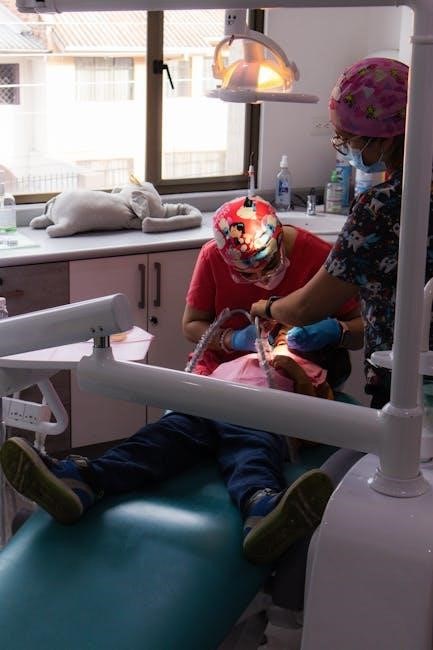
The 2023 guide details fees for preventive care like scaling, restorative work such as fillings and crowns, and complex treatments like root canals, varying by procedure code.
Preventive Services: Scaling and Polishing Fees
Preventive dental care, encompassing scaling and polishing, forms the cornerstone of maintaining optimal oral health, and the 2023 Manitoba Dental Fee Guide outlines specific fee structures for these essential services. Typically, fees are categorized based on the complexity of the procedure and the extent of calculus (tartar) buildup. A basic scaling and polishing, addressing minimal buildup, generally falls within a defined fee range, while more extensive procedures, requiring increased time and specialized techniques, incur higher costs.
The guide differentiates between procedures performed by a dentist versus a registered dental hygienist, with hygienist fees often being slightly lower. It’s crucial to understand that these fees represent the maximum allowable charges; dentists may choose to charge less. Furthermore, the frequency of scaling and polishing recommended by a dental professional depends on individual oral hygiene practices and susceptibility to periodontal disease. Patients with a history of gum disease may require more frequent treatments, impacting overall costs.
Understanding the fee code associated with the specific scaling and polishing procedure performed is vital for accurate billing and insurance claim submissions. The Manitoba Dental Association provides detailed information regarding these codes within the official fee guide, ensuring transparency and clarity for both patients and providers. Always confirm the exact fee with your dental office prior to treatment to avoid any unexpected charges.
Restorative Services: Fillings and Crowns – Fee Ranges
Restorative dental work, including fillings and crowns, addresses damaged or decayed teeth, restoring both function and aesthetics. The 2023 Manitoba Dental Fee Guide details a tiered fee structure based on the material used, the size of the restoration, and the tooth’s location. Fillings, for instance, vary significantly in cost depending on whether they are amalgam (silver), composite (tooth-colored), or gold. Composite fillings generally command a higher fee due to their aesthetic advantages and increased complexity of placement.

Crowns, which completely encase a damaged tooth, also exhibit a wide fee range. Factors influencing cost include the material – porcelain fused to metal, full gold, or all-ceramic – and the tooth requiring restoration. Molars, due to their larger size and complexity, typically incur higher crown fees than front teeth. The guide specifies distinct fees for different crown types and tooth locations.
It’s important to note that these fees cover the procedure itself, but may not include additional costs like anesthesia or necessary X-rays. Discussing a comprehensive treatment plan with your dentist, including a detailed breakdown of all associated costs, is crucial for informed decision-making and budgeting for restorative care. Always request a written estimate before proceeding with any treatment.
Endodontic Treatment: Root Canal Costs
Endodontic treatment, commonly known as root canal therapy, addresses infection within the tooth’s pulp. The 2023 Manitoba Dental Fee Guide outlines costs based on the tooth’s location – incisors, canines, premolars, and molars – reflecting the varying complexity of each procedure. Root canals on molars, possessing multiple roots and a more intricate anatomy, naturally carry a higher fee than those performed on simpler incisors.
The fee typically encompasses the entire process: access opening, cleaning and shaping of the root canals, disinfection, and filling/sealing the canals. However, post-operative X-rays to confirm successful treatment, or the eventual need for a crown to protect the treated tooth, are usually billed separately. The guide provides specific fee codes for each tooth type undergoing root canal therapy.
Factors influencing the overall cost can include the severity of the infection, the presence of calcifications within the canals, or the need for specialized instruments. A thorough consultation with an endodontist or general dentist is essential to receive an accurate treatment plan and associated cost estimate before commencing the procedure. Understanding these potential variables ensures financial preparedness.
Ethical Considerations and Professional Conduct
Maintaining patient trust demands ethical practice; cases like Gary Levine’s highlight the importance of boundaries and appropriate conduct, alongside transparent fee structures and waivers.
Recent Cases of Professional Misconduct (e.g., Gary Levine Case)
The case of Gary Levine, a retired Manitoba dentist, serves as a stark reminder of the ethical obligations within the dental profession. Levine pleaded guilty to having an inappropriate sexual relationship with a patient, a severe breach of professional conduct. This misconduct was further compounded by his subsequent waiving of the patient’s dental service fees, raising concerns about potential abuse of power and attempts to conceal the inappropriate relationship.
Levine was ultimately fined $30,000 as a consequence of his actions. This case underscores the critical importance of maintaining clear professional boundaries with patients. Dental professionals hold a position of trust, and any exploitation of that trust is a serious offense. The College of Registered Dental Surgeons of Manitoba (CRDSM) has a strict code of ethics that all dentists are expected to adhere to, emphasizing respectful and appropriate interactions with patients at all times.
Beyond the specific details of the Levine case, it highlights the broader need for ongoing education and awareness regarding professional misconduct. Dentists must be vigilant in upholding ethical standards and recognizing situations where boundaries may be compromised. The CRDSM provides resources and support to help dentists navigate complex ethical dilemmas and ensure they are practicing responsibly and with integrity.
Implications of Fee Waivers and Patient Relationships
Fee waivers, while sometimes offered with good intentions, carry significant ethical implications within the dentist-patient relationship. As demonstrated in cases like that of Gary Levine, waiving fees can create a perceived or actual conflict of interest, potentially blurring professional boundaries. Such actions can raise questions about undue influence or attempts to compromise a patient’s objectivity regarding their care or any subsequent complaints.
The Manitoba Dental Association and the College of Registered Dental Surgeons of Manitoba (CRDSM) emphasize the importance of transparency and consistency in fee structures. While dentists have discretion in certain situations, waivers should be documented thoroughly, with a clear rationale unrelated to personal relationships or attempts to influence patient behavior. A pattern of selective fee waivers could be viewed as unethical or even illegal.
Maintaining a strictly professional relationship is paramount. Offering financial assistance should be approached cautiously, potentially through established charitable programs rather than direct waivers. Dentists must prioritize the integrity of the patient-provider dynamic and avoid any actions that could be interpreted as exploitative or compromising their professional judgment. Clear policies and adherence to ethical guidelines are crucial for navigating these sensitive situations.

Resources and Further Information
For the official 2023 Manitoba Dental Fee Guide and inquiries, contact Manitoba Dental Services at 100-114 Garry Street, Winnipeg, R3C 4V4, for detailed assistance.
Accessing the Official 2023 Manitoba Dental Fee Guide
Obtaining the most current and accurate information regarding dental procedure costs in Manitoba is crucial for both patients and dental professionals. The official 2023 Manitoba Dental Fee Guide serves as the definitive resource for standardized fees across the province. While a direct online link to a downloadable PDF isn’t prominently displayed on the Manitoba government website as of late 2025, accessing this vital document typically involves contacting Manitoba Dental Services directly.
Dental professionals, who are members of the Manitoba Dental Association, generally receive the fee guide as part of their membership benefits. Patients can often request a copy from their dentist’s office. Alternatively, contacting Manitoba Dental Services via mail – at 100-114 Garry Street, Winnipeg, R3C 4V4 – or through their official communication channels is recommended. It’s important to note that fee guides are subject to periodic updates, so ensuring you have the 2023 version is essential for accurate billing and reimbursement purposes. Understanding the fee structure empowers patients to discuss costs with their dentists and plan for their dental care effectively.
Contacting Manitoba Dental Services for Inquiries
For clarification on the 2023 Manitoba Dental Fee Guide, claim submissions, coordination of benefits with programs like the CDCP, or any related queries, reaching out to Manitoba Dental Services is paramount. The primary method for submitting secondary payer claims, including those involving the CDCP, is via mail. Documents, including the Explanation of Benefits (EOB) and the claim itself, should be sent to Manitoba Dental Services at 100-114 Garry Street, Winnipeg, R3C 4V4.
While a dedicated phone number or extensive online contact form isn’t readily available in public resources as of late 2025, utilizing the postal address ensures a documented communication trail. Inquiries regarding specific fee discrepancies, particularly when Manitoba program fees exceed CDCP rates, should be clearly outlined in the correspondence. Remember that Manitoba Dental Services processes claims based on their program policies, and understanding these policies is key to a smooth reimbursement process. Prompt and accurate communication with Manitoba Dental Services is vital for resolving any billing or coverage concerns effectively.